Caring for a Suit in Bangkok Humidity
A suit that survives ten years in London can be finished in two here. Heat, humidity and hard air conditioning attack cloth in ways temperate climates never do — and most of the damage comes from well-meant care, not from wear.
What the climate does to a suit
What damages a suit here
Three things, in this order: over-cleaning, still damp air, and heat used to dry it. Ordinary wear barely registers next to them. Bangkok's problem is not really the 35°C outside — it is the swing between that and aggressive air conditioning inside, repeated several times a day. Cloth expands and contracts, absorbs moisture from the air and then has it pulled back out, and it needs time to settle between each cycle.
Almost everything below follows from one idea: let the cloth dry and relax on its own, and give it room to do so.
Airing beats cleaning
After a day's wear, hang the jacket somewhere with air movement — not in a wardrobe pressed between other clothes — and leave it overnight before it goes away. That alone removes most odour and lets the wool recover its shape. Dry-cleaning is a last resort, not a routine: the solvents strip the wool's natural oils, and a suit cleaned monthly will look tired within a year while one cleaned twice a year and aired properly will not.
A clothes steamer is the single most useful thing you can own for a tailored wardrobe in this climate. It relaxes creases, refreshes cloth between wears, and costs a fraction of what repeat dry-cleaning does.
Storage and rotation
Storage: the plastic bag is the enemy
Five storage rules follow from one idea, that air has to reach the cloth:
- Broad wooden hangers. A wire hanger concentrates the whole weight of the jacket on two points and deforms the shoulder — the one part of a garment that cannot be re-cut afterwards.
- Space either side. Air has to reach the cloth. A packed wardrobe is where mildew starts.
- Never store in plastic. The sleeve a dry-cleaner returns a suit in is for transport. Left on, it traps moisture against the cloth in exactly the conditions mildew wants.
- Trousers by the hem, not folded. Hanging them upside down by the cuffs lets gravity pull the crease straight.
- Empty the pockets. A phone or a wallet left in a jacket for a month will stretch the pocket permanently.
Rotation is the whole game
Wool recovers by resting. In a temperate climate a suit needs a day; in Bangkok humidity it genuinely needs the full 24 hours to dry out and relax. Three suits worn in rotation will each outlast a single suit worn daily by more than three times over — the maths is not linear, because the damage from wearing damp cloth compounds. If you are building a wardrobe here, that is the argument for two or three mid-range suits rather than one expensive one.
Cloth, and when to bring it back
Which cloth forgives this climate
Care matters, but the fabric decides how much care you will need. High-twist tropical wool between 200g and 260g sheds creases and dries quickly, which is why it is what we recommend for anything worn weekly. Open weaves such as hopsack and fresco move air rather than trapping it. Linen is cooler still but creases within the hour, which is a look rather than a fault. What genuinely suffers here is high synthetic content — it holds heat and odour and does not recover — and very high Super numbers, which are beautiful and fragile. The fabric guide goes through the trade-offs in weight and weave.
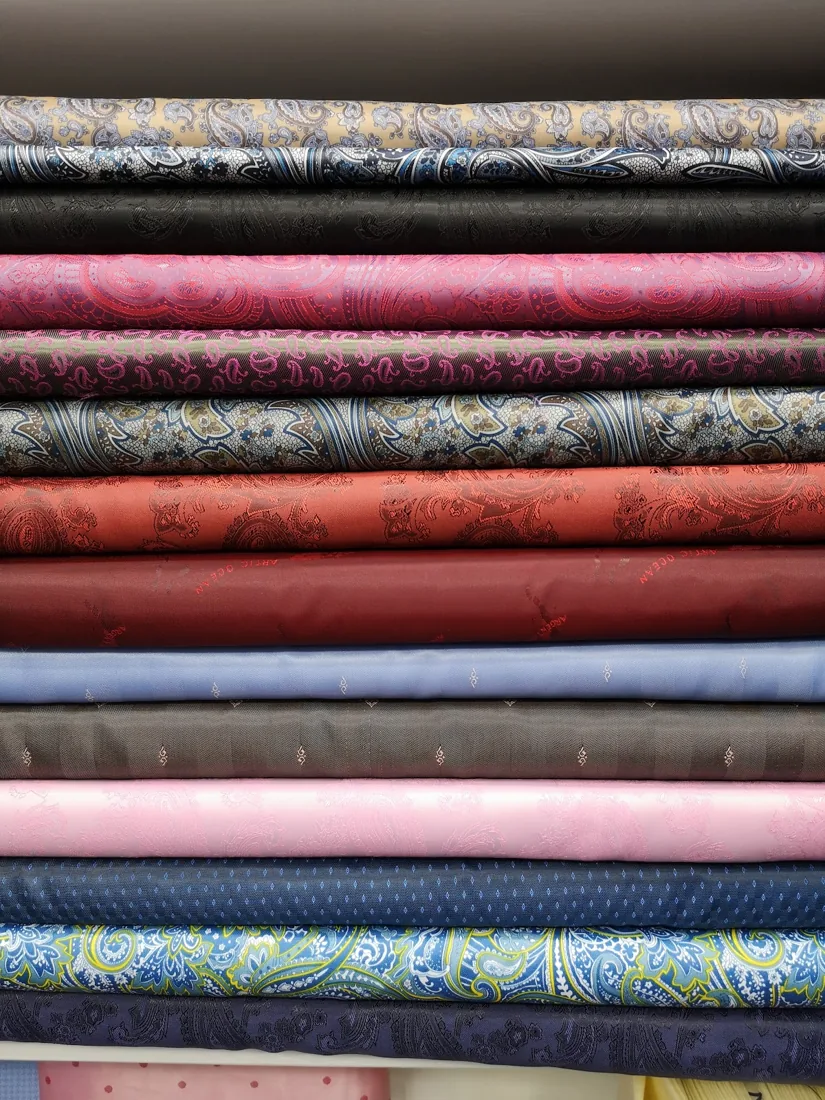
Lining matters more than most people expect, because it is the layer actually against your skin. A viscose or cupro lining breathes considerably better than cheap polyester, and it is one of the least expensive upgrades available when a suit is being made. Ask what you are getting — it is rarely volunteered.
When to bring it back to us
A suit that has stopped fitting is usually fixable and worth fixing. Waist, sleeve length, trouser length and taper are all routine work. The shoulder is the exception — it is where the jacket is built, and recutting it means dismantling the garment, which normally costs more than the suit is worth. Bring the piece in and we will tell you honestly which side of that line it falls on, and say so plainly when the answer is that it is not worth the work.
Frequently ✳ Asked
How often should I dry-clean a suit in Bangkok?
Sparingly — a few times a year at most, and only when the garment is genuinely soiled. Dry-cleaning solvents strip the natural oils out of wool and flatten the finish, so over-cleaning ages a suit faster in a year than wearing it does. Between wears, air the jacket somewhere with moving air and steam creases out rather than pressing them flat. A clothes steamer is the single most useful thing to own for a tailored wardrobe in Bangkok — it refreshes cloth between wears and costs a fraction of what repeat dry-cleaning does over a year.
How do I stop mildew on a suit in this climate?
Air movement and space. Mildew needs still, damp air, so the two things that cause it are a sealed plastic garment bag and a jacket wedged against other clothes. Hang suits on a broad wooden hanger with a gap either side, somewhere the air moves, and never store one in the plastic sleeve it came home from the cleaner in — that sleeve is for transport, and left on it traps moisture against the cloth in exactly the conditions mildew wants. A packed wardrobe with no air between garments is where the problem usually starts.
Can I wear the same suit two days running?
You can, but it will not last as long. Wool recovers its shape by drying out and relaxing, and in Bangkok humidity that takes a full day. Giving a suit 24 hours out of service between wears is the single cheapest thing you can do to extend its life — it is also the practical argument for owning three rather than one. Three mid-range suits in rotation will comfortably outlast one expensive suit worn daily, and the difference is not marginal, because the damage from wearing damp cloth compounds.
What should I do after being caught in the rain?
Hang it immediately somewhere with moving air, at room temperature, and let it dry on its own. Do not use a hairdryer, a heater or direct sun: fast heat shrinks wool fibres unevenly and can permanently distort a shoulder or a lapel. Once it is fully dry, steam out any creasing. Rain itself does very little damage to wool; drying it wrongly does most of it. If the jacket is soaked through, reshape the shoulders by hand while it is still damp so it dries in the right shape rather than setting into whatever position it was hung in.
Do I need to iron a tailored shirt?
Iron shirts, steam suits. A shirt is flat cotton and takes an iron happily. A jacket is a shaped, layered garment with canvas inside it, and pressing it flat destroys the roll the tailor built into the lapel and the shape over the chest. Steam relaxes the fibres and lets that shape return without crushing it. If you only ever remember one rule for a tailored wardrobe in this climate, make it this one — an iron taken to a jacket chest is the fastest way to undo work you paid a tailor to do, and it cannot be reversed afterwards.
How should I pack a suit for a flight home?
Turn the jacket half inside out — fold one shoulder into the other so the outer cloth faces inward — then lay it flat on top of everything else in the case. That protects the shoulder, which is the part you cannot have re-cut later. Hang it up as soon as you arrive and steam out the travel creases; most will drop on their own within a day. My Suit Bangkok will press a garment for you if you are collecting it in Pratunam shortly before a flight, so it travels in the best possible condition rather than being folded straight out of the fitting.
Book a fitting at Platinum Fashion Mall, or message us on LINE / WhatsApp to start your suit.